
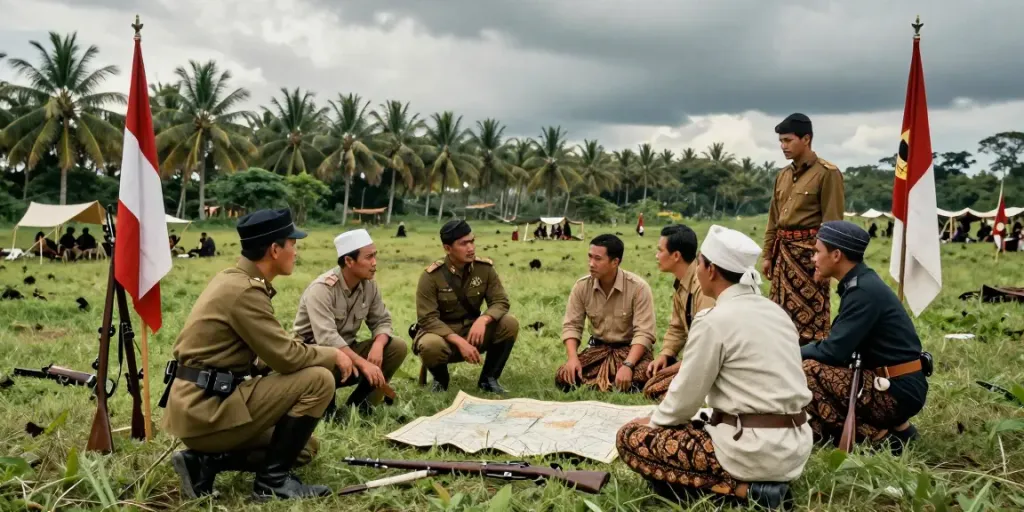
Understanding the Dutch-Indonesian Colonial Conflict
The history of the Dutch-Indonesian conflict is a complex tapestry woven from centuries of colonialism, cultural exchange, and resistance. As Indonesia seeks to understand its past, it is essential to explore the pivotal moments that defined this struggle for sovereignty. This historical narrative can be better understood through the lens of key events, cultural dynamics, and the human spirit that fueled the struggle for independence. For those interested in a deep dive into this subject, rokok88 offers valuable insights into this critical period of history.
Historical Context of Dutch Colonization
The Dutch began their colonization of Indonesia in the early 17th century, primarily driven by trade ambitions and the lucrative spice market. The establishment of the Dutch East India Company (VOC) in 1602 marked the beginning of a period characterized by exploitation and territorial expansion. The VOC's monopoly over trade led to significant economic benefits for the Netherlands while imposing heavy oppression on local populations.
By the 19th century, the Dutch had consolidated their control over most of the archipelago. This era was marked by the infamous Cultivation System, which forced Indonesian farmers to grow cash crops for export rather than subsistence crops for local consumption. This system not only enriched the Dutch but also led to widespread poverty and discontent among Indonesians, setting the stage for future conflict.
Key Events Leading to War
The tension that simmered under the surface of colonial rule eventually boiled over into open conflict. The early 20th century saw increasing nationalist sentiments among Indonesians, propelled by movements advocating for independence. Events such as the Java War (1825-1830) and the rise of organizations like Budi Utomo (founded in 1908) played a crucial role in rallying support against colonial rule.
The Japanese occupation during World War II (1942-1945) significantly altered the dynamics of power in Indonesia. The Japanese dismantling of Dutch control provided a unique opportunity for Indonesian nationalists to mobilize and gain momentum. Following Japan's defeat in 1945, Indonesia declared its independence, leading to a power vacuum that ignited the Dutch-Indonesian War.
The Role of Indonesian Nationalism
Indonesian nationalism played a vital role in the conflict against Dutch colonialism. Figures like Sukarno and Mohammad Hatta emerged as prominent leaders who articulated the aspirations of the Indonesian people. Their visions for an independent Indonesia galvanized support across various regions, transcending ethnic and cultural divides.
This burgeoning nationalism was not only a response to Dutch oppression but also a powerful assertion of cultural identity and self-determination. The call for independence resonated widely, uniting various groups who formerly had limited interactions with each other. As the fight for freedom intensified, the commitment to national identity became a driving force behind the resistance.
Major Battles and Strategies in the Conflict
The Dutch-Indonesian War was marked by numerous battles that showcased both sides’ military tactics and strategies. Understanding these confrontations provides insights into the broader context of the struggle for independence.
Analyzing Key Battles of the Dutch-Indonesian War
One of the most significant battles occurred in Surabaya in November 1945, where Indonesian nationalists faced off against Dutch troops. Known as the Battle of Surabaya, this conflict became emblematic of the Indonesian struggle for independence. The fierce resistance by local forces, although eventually overwhelmed, significantly impacted international opinion about Dutch re-colonization efforts.
Another critical engagement was the General Offensive of March 1949, where Indonesian forces launched a coordinated attack on Dutch positions across the country. This shift in tactics demonstrated the increasing sophistication and organization of Indonesian guerilla fighters, showcasing their ability to challenge Dutch military supremacy effectively.
Military Strategies Employed by Both Sides
The Dutch relied on conventional warfare, utilizing their superior firepower and organized military structure. However, they underestimated the resolve and adaptability of the Indonesian forces, who employed guerilla tactics, utilizing knowledge of the local terrain to their advantage. This adaptability was crucial in mounting sustained resistance against a better-equipped foe.
Furthermore, propaganda played a significant role in shaping public perception. The Dutch aimed to portray their colonial rule as benevolent and necessary for the region's stability, while Indonesian leaders sought to highlight the brutality of colonization and the legitimacy of their quest for self-determination.
Impact of Geography on War Outcomes
The diverse geography of Indonesia, with its myriad islands and varying terrains, profoundly influenced the conflict. Guerilla fighters utilized the dense jungles and mountainous regions to launch surprise attacks and then quickly retreat, complicating Dutch military responses. This geographical advantage allowed smaller Indonesian factions to inflict considerable damage despite their lack of military resources.
The archipelago's vastness also posed logistical challenges for the Dutch, who struggled to maintain control across numerous islands effectively. As communication difficulties arose, the Indonesian forces capitalized on the terrain's challenges, enabling a protracted conflict that ultimately exhausted Dutch resources and resolve.
Influential Figures in the War
The Dutch-Indonesian War saw a range of influential figures whose ideologies and actions shaped the course of the conflict. Understanding their contributions offers valuable insight into the motivations behind the struggle for independence.
Notable Dutch Military Leaders
Among the prominent Dutch military leaders were General Simon Spoor and Lieutenant-General Hendrikus Colijn. Both played critical roles in shaping Dutch military strategy and responses during the conflict. However, their reliance on conventional military tactics often clashed with the realities of guerilla warfare deployed by Indonesian forces, highlighting the disconnect between military strategy and ground realities.
Prominent Indonesian Nationalists
Key figures in the nationalist movement included Sukarno, who later became Indonesia's first president, and Mohammad Hatta, who served as vice president. Their speeches and actions during the war helped mobilize support and unify various factions under the common goal of independence. Their ability to articulate the aspirations of the Indonesian people significantly contributed to the international acknowledgment of Indonesia’s right to self-governance.
Their Legacies in Indonesian History
The legacies of these leaders are deeply etched in Indonesian history. Sukarno and Hatta are celebrated as national heroes, their contributions forming the foundation of modern Indonesia. The principles of independence, unity, and social justice they advocated continue to resonate in contemporary Indonesian society, reminding future generations of the sacrifices made for freedom.
Aftermath and Indonesia’s Path to Sovereignty
The conclusion of the Dutch-Indonesian War marked a significant turning point in both nations’ histories. The path to sovereignty was fraught with challenges but ultimately led to the recognition of Indonesia as an independent state.
Consequences of the War on Both Nations
The war had profound consequences for both the Netherlands and Indonesia. For the Dutch, it was a stark reminder of the limits of imperial power, leading to a reevaluation of their colonial policies. The financial and military costs incurred during the conflict prompted discussions about decolonization within Europe.
For Indonesia, the war solidified a sense of national identity and unity among diverse ethnic groups. The scars of conflict fostered a collective memory that would shape the nation’s policies and societal values for decades to come.
International Recognition of Indonesian Independence
Indonesia’s struggle for independence garnered international attention, with various nations supporting its cause. The establishment of diplomatic relations and Indonesia’s admission to the United Nations in 1950 underscored the global consensus recognizing Indonesia’s sovereignty.
The recognition served as an impetus for the broader decolonization movements across Asia and Africa, inspiring other nations to challenge colonial regimes and pursue self-determination.
Modern Implications of Historical Relations
The historical relations between Indonesia and the Netherlands continue to evolve in contemporary contexts. While the legacy of colonization remains a sensitive topic, both nations now engage in dialogues focused on reconciliation and mutual development. Efforts to foster economic cooperation, cultural exchange, and re-examine historical narratives reflect a commitment to building a constructive partnership in the 21st century.
Lessons from the Conflict for Future Generations
The Dutch-Indonesian conflict serves as a poignant reminder of the complexities of colonialism and its enduring impact. Analyzing this historical period reveals valuable lessons that can inform current and future aspirations.
Understanding Colonialism's Impact Today
The socio-political ramifications of colonialism are still felt in Indonesia, as issues of inequality and cultural identity continue to shape societal dynamics. Acknowledging this historical context is crucial for fostering a sense of unity and progress moving forward.
Preserving Historical Memory
It is imperative for future generations to preserve the memory of the struggle against colonialism. Education about this history can empower individuals to engage actively in societal development and political discourse. By understanding the past, young Indonesians can forge a future rooted in justice and equality.
Fostering Indonesian-Dutch Relations in the 21st Century
Building a positive relationship between Indonesia and the Netherlands requires a commitment to understanding and reconciliation. Initiatives that promote cultural exchange, economic partnerships, and collaborative historical research can bridge gaps and foster mutual respect. Through these efforts, both nations can honor their complex history while paving the way for a collaborative future.
What were the main causes of the Dutch-Indonesian War?
The Dutch-Indonesian War was primarily fueled by nationalist sentiments, economic exploitation, and the desire for self-determination among the Indonesian people, alongside the historical context of colonialism that fostered deep-seated resentment towards Dutch rule.
How did the conflict influence modern Indonesia?
The war played a crucial role in shaping Indonesia’s national identity, unifying various ethnic groups under a common cause and leading to the establishment of an independent and sovereign state recognized internationally.
What strategies were most effective in the warfare?
Indonesian guerilla tactics, leveraging local geography and popular support, proved to be highly effective against Dutch conventional forces, showcasing the resilience and ingenuity of Indonesian fighters during the conflict.
Who were the key figures in the conflict?
Notable figures such as Sukarno and Hatta emerged as central leaders in the fight for independence, their leadership and vision pivotal in rallying support and articulating the aspirations of the Indonesian people.
What lessons can we learn from this historical event?
This historical event underscores the enduring consequences of colonialism, highlighting the importance of understanding the past to inform future policies and relationships, fostering justice, equality, and reconciliation between nations.